The criminal justice system can be daunting, but you don’t need to go through it alone. Our Criminal lawyers are here to guide you every step of the way.
Contact Our Firm








D.A. acquitted of one count of Sexual Assault and one count of Assault following a three-day trial at the Ontario Court of Justice, Toronto. The complainant provided two police statements, both of which were played in court in lieu of direct examination. Allegations included shoving, non-consensual sexual touching, and attempts at unwanted intercourse. During cross examination of the complainant, Mr. Whitfield presented multiple inconsistencies between the two police statements, none of which the complainant could adequately explain. The accused also testified. The trial judge found the accused’s evidence to be credible, and, in the reasons for acquittal, cited serious shortcomings in the complainant’s evidence.
P.R. acquitted of one count of Sexual Assault and one count of Assault following a two-day trial at the Ontario Court of Justice, Toronto. The complainant alleged non-consensual penetrative sex following an evening spent smoking marijuana with her former friend, the accused. The client denied any sexual contact. Several male friends of the complainant secretly recorded the accused “confessing” to the offence. At trial, the complainant claimed not to remember most of the details she had relayed to the police. Mr. Whitfield pointed to serious reliability concerns in complainant’s evidence, including an admission that the complainant had originally considered the assault to be a dream. Mr. Whitfield also noted the oppressive circumstances of the confession video. The trial judge accepted Mr. Whitfield’s submissions on the so-called confession and, in acquitting the accused, cited profound reliability concerns with the complainant’s evidence.

Charge of Sexual Assault against E.K. withdrawn in the Ontario Court of Justice, Newmarket. E.K., a chiropractor, was charged with sexual assault following a treatment session with the complainant, his patient. The complainant alleged that while lying face down on E.K.’s chiropractic treatment table during a lower spine treatment, he drooled on her, exposed and then licked her buttocks. Joseph Neuberger, Neuberger & Partners LLP, Toronto Criminal Lawyers, was retained to defend the case. While DNA evidence established that a bodily fluid from E.K. was transferred to the complainant while he was bending over and performing the treatment, E.K. maintained that he was suffering from allergies at the time and that any fluid the complainant on her was likely an inadvertent nasal drip. Because the complainant was lying face down at all times, she was unable to see what, if anything, actually happened. The matter was set down for trial as the Crown originally refused to withdraw the charge given the complainant’s insistence that she was sexually assaulted. After lengthy discussions leading up to and including the day of trial, the Crown was persuaded as to the weaknesses in the complainant’s evidence. The Crown, as a result, agreed to withdraw the charge.
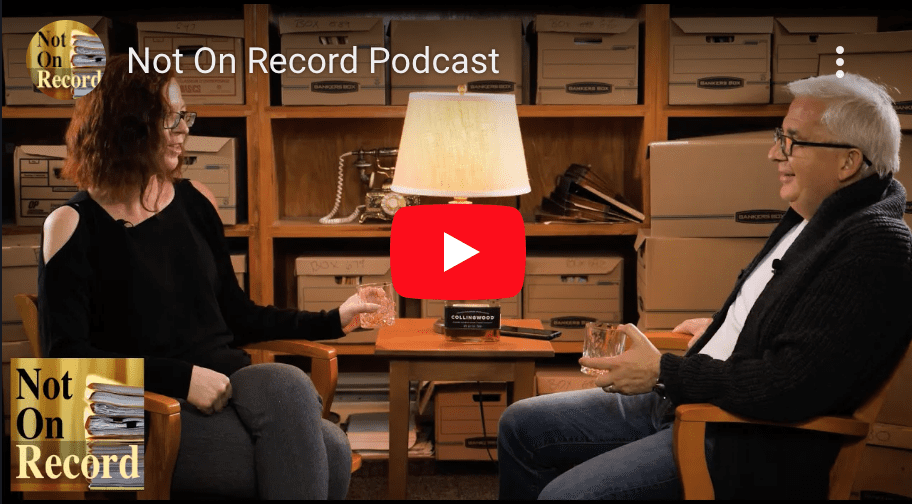
Charges of Sexual Assault x 5 withdrawn prior to setting a date for trial, Toronto. R.S. started an affair with a fellow employee who he was indirectly supervising. The employee moved to a different role and the two carried on an affair for two years. R.S. started to pull away from the relationship trying to gently end it as he was regretting his actions because he was married. He had several discussions with the fellow employee who was rather unhappy about him wanting to end the relationship. After he ceased intimate contact, she walked into a police station and provided a statement to police giving rise to five charges of sexual assault. R.S. retained Joseph Neuberger of Neuberger & Partners LLP, Toronto Criminal Lawyers. At the outset Joseph Neuberger asked about all communications and any video or audio with the complainant. R.S. had deleted everything but still had his phone. Joseph retained a digital forensic expert and after some time, considerable data was recovered and extracted. Once disclosure was received, Joseph and Diana Davison worked through the client’s evidence to line it up with the dates of the allegations and the narrative of the complainant. Joseph drafted an RPC memo (reasonable prospect of conviction memo) for the Crown to assess the strength of the case. Joseph turned over 30 or more messages, multiple video, and audio recordings. The client had recorded three important conversations with the complainant when he was attempting to end the affair. The video evidence consisted of the complainant recording sex toys she had brought into the office for encounters and provided audio descriptions of them and what she wanted to do. Messages often were highly sexualized with the complainant often initiating the contact or replying with enthusiasm. Further the audio recordings were not only devastating to the complainant’s narrative but frightening in the sense that the complainant’s statement was diametrically opposite to the recordings and hence the truth. One audio was the complainant being upset at R.S. not satisfying her. Another was the complainant threatening to ruin R.S. life because he would not leave his wife. In fact, her statements were incredibly insidious including – “it makes me so happy and I laugh to see your face when I tell you, I will ruin your life”. Numerous comments were made consisting of threats with little to no regard for R.S. emotional state and were directly aimed at intimidating him to stay in the relationship and leave his wife. The third audio was an argument about her wanting a permanent relationship with R.S. That she would leave her partner and want to have a marriage with R.S. The complainant’s statement specifically mentioned that she was continually harassed, sexually abused, and manipulated by R.S. with not a hint of her involvement in a mutually consensual affair. This was one of the worst cases of fabrication we have seen at the firm. See our podcast episode on this case – Not on Record – on YouTube. After the Crown reviewed all defence evidence, all charges of Sexual Assault were withdrawn.

Z.P. was charged with one count of Assault and one count of Breach of an Undertaking out of Toronto. Z.P. had an argument with his girlfriend. The argument escalated to the two of them pushing and shoving each other. Z.P. asked his girlfriend to leave his residence. She refused. Z.P. called 911 and police officers arrived. After speaking to Z.P.’s girlfriend, police officers arrested Z.P. for assault. After the arrest, Z.P.’s girlfriend, the complainant, called him many times and sent him multiple text messages. Z.P. picked up a phone call from her and spoke to her. After the phone conversation, the complainant contacted police and told them that Z.P. breached his undertaking. The complainant provided a call log as proof. Z.P. was charged with a breach of undertaking. Z.P. retained Mariya Protsenko and Daisy Zhang of Neuberger and Partners LLP. Mariya put together a package with the client’s version of events, reference letters and counseling report. Furthermore, Mariya had a pre-trial with the Crown Attorney and convinced the Crown Attorney not to prosecute Z.P. After entering into a peace bond, charges against Z.P. were withdrawn.

Charge of Domestic Assault withdrawn prior to setting trial, Toronto. The client was charged with domestic assault alleged by his former girlfriend. The client retained Grace Condello of Neuberger & Partners LLP, Toronto Criminal Lawyers. The client had broken up with his girlfriend. She attended his condo however he refused to open the door to let her in. The complainant called 911 and stated that S.S. slapped her. Officers attended and spoke with the complainant in the lobby. Officers advised the complainant that they would be arresting and charging SS and immediately told officers she lied. The complainant told officers that she did not know he would be charged when she called 911 as she thought officers would just speak with S.S. The complainant said to officers “I made up this whole thing”. The complainant said that she was upset because she “wanted to meet his parents” and they got into an argument when the client told her that they need to take a break. Ms. Condello provided the Crown with messages that the complainant had been sending to S.S. and was able to show the Crown that this was not a case of a recanting complainant, but a false allegation. The Crown agreed to withdraw the charge. * Important reminder that the police fail to exercise discretion even when the complainant immediately retracts the complaint.
Charges of Domestic Assault, and Mischief withdrawn prior to setting a trial date, Brantford. The client retained Grace Condello of Neuberger & Partners LLP, Toronto Criminal Lawyers, to defend him. The client and the complainant are husband and wife. The complainant, husband, alleged that his wife assaulted him and threw items at him, which broke. Ms. Condello reviewed the disclosure which showed that one of the officers wrote in the notes that the complainant was the initial aggressor, another officer noted that there were grounds to arrest the client. The notes detailed elements of aggressive acts by the complainant that ought to have resulted in his arrest. Ms. Condello spoke with the Crown Attorney regarding the inconsistency between the officers’ notes. It was further discussed that the complainant and the client wish to reconcile. It was discussed that O.G. would complete PARS therapy sessions. All charges were withdrawn.
Client found not guilty of Sexual Assault and Assault after a three-day trial in the Ontario Court of Justice, Brampton. D.M. was in an unhappy marriage. Both he and the complainant were thinking about ending the marriage. The complainant had an argument with D.M. and while he was out with a friend, she contacted police and alleged a historical sexual assault and an assault. D.M. was charged. He retained Joseph Neuberger of Neuberger & Partners LLP to defend him. Joseph obtained a complete history and worked with the family lawyer representing D.M. in the matrimonial proceedings. The pleadings showed the complainant filed for divorce days after the arrest of D.M. and asked for an unequal distribution of the matrimonial assets and alleged a history of abuse both verbal and physical. The pleadings outlined significantly more allegations than her sworn police statement. Further, Joseph Neuberger, sent D.M.’s smart phone to an expert to do an extraction of lost messages between the parties including days leading up to the argument and the day of the argument. Through the forensic analysis, relevant messages were obtained that showed the complainant was in fact asking D.M. to not leave the marriage and to work through their differences. However, on the day the complainant contacted police, she accessed his phone and sent herself a message thread D.M. had with another women about going away for the weekend. The message thread appeared that D.M. was starting a relationship with another woman and thus, seemed to be a motive for the complainant to make an allegation due to her anger at D.M. The matter proceeded to a motion under section 276/278 of the Criminal Code to have the messages admitted. The motion was successful. At trial, the complainant was confronted with a series of messages that undermined her story to police, including rebutting that she was the one who wanted to end the marriage. Further, material inconsistencies were raised through cross-examination on her family pleadings. Finally, the forensic evidence demonstrating that she accessed his phone and retrieved D.M.’s message thread with another woman created a strong motive to fabricate. Rather than just admitting that she had accessed his phone and sent the message thread to herself, she denied it. The defence called the expert and had admitted the forensic extraction into evidence. After testimony of D.M. and detailed written submissions, D.M. was found not guilty of both counts of Sexual Assault and Domestic Assault.
P.L. was found not guilty of two counts of Sexual Assault after a three-day trial, Ontario Court of Justice, Newmarket courthouse. He and the complainant were university students who met in class. The two went on several dates and had a wonderful time together. The two dated, and on one evening, P.L. invited the complainant to his place. While at P.L.’s apartment, the complainant and P.L. talked, watched TV and eventually as the evening progressed, the complainant changed into a lingerie. The two engaged in consensual sexual acts. The next day, the complainant messaged P.L. on Instagram and asked P.L. if she could come over to his place. The two of them listened to music and watched movies again. They engaged in consensual sexual acts. The complainant stayed overnight at P.L.’s place. In the morning, the two of them completed university assignments. The complainant asked P.L. if he wanted to meet her mother. P.L. answered that he was not planning to do that. After that, he proceeded to talk on the phone with another female. The complainant got upset and left P.L.’s place. A couple of days later, P.L. broke up with the complainant over social media posts. The complainant sent several messages to P.L. about how angry she was about his posts and told him to take the posts down. P.L. didn’t take the posts down and the complainant attended a police station to provide a statement alleging sexual assault that allegedly occurred on two occasions. P.L. retained Mariya Protsenko of Neuberger & Partners LLP, Toronto Criminal Lawyers. Mariya obtained from the client provide all messages between him and the complainant. Mariya brought a s.276/278 application to have the messages admitted at trial particularly relevant to motive to fabricate and consent. The application was successful. At trial, Mariya cross examined the complainant who admitted that she failed to disclose during her statement key pieces of information that did not fit her narrative of being sexually assaulted. In addition, Mariya established that the complainant misled the police and the Court about having never wanted to attend P.L.’s place the second time. When confronted with the messages, the complainant’s false assertion was exposed significantly undermining her credibility. The complainant made it clear in her evidence at trial that she did not want to attend his apartment the second time. The messages directly contradicted this and refused to explain why she misled the police and the Court. The client testified and provided direct and detailed evidence of their evenings together including consent to sexual activity. Although P.L. handled the relationship poorly including breaking up with the complainant through social media, he was young and not on trial for hurtful conduct but for sex assault. Mariya provided detailed written and oral submissions carefully outlining the series of inconsistencies and frank lies told by the complainant. P.L.’s evidence was organically logical and believable. P.L. was found not guilty of all the charges.
Charges of Luring, Obtaining Sexual Services for Consideration, Invitation to Sexual Touching and Make Child Pornography, withdrawn prior to setting trial dates. D.M. was on an escort website and had made arrangements to meet with a sex worker. Upon arrival he was arrested for the charges noted. He retained Joseph Neuberger, Neuberger & Partners LLP, Toronto Criminal Lawyers, to defend him. These cases are project cases across Ontario. The prosecution case relies on the messaging with the undercover officer. In this case, the messaging was confusing and equivocal as to whether D.M. had both been communicating with someone he knew was under 18 and had in fact entered into a financial transaction for sexual services. D.M. attended 10 sessions of therapy regarding his decision making, and the harms of human trafficking as well as having donated $500.00 to a charity. Joseph Neuberger and Crown Counsel agreed on a resolving by way of a common law peace bond and all charges were withdrawn.
Past results are not necessarily indicative of future results and that the amount recovered and other litigation outcomes will vary according to the facts in individual cases.